Data Protection Fines – Deutsche Bahn syle

The Berlin data protection registrar (Berliner Beauftragter für
Datenschutz und Informationsfreiheit
) has completed an investigation into employee monitoring by Deutsche Bahn, the German federal railway company.  On 16 October 2009 he imposed a fine on Deutsche Bahn of  €1.1 million.  The company had fourteen days to appeal the fine, but a  press release
from the Berlin regulator dated 23 October 2009 suggests that Deutsche Bahn have accepted the fine.

Amongst other infringements, the company had been found to have monitored hundreds of thousands of employee e-mails and searching their computer hard drives. During 2006 and 2007 all employee external email accounts were monitored. This was a major scandal in Germany when the story first broke, which led the Deutsche Bahn CEO at the time, Hartmut Mehdorn to announce his resignation in March 2009, to be replaced by former Daimler executive Ruediger Grube.

In contrast, if Network Rail and all the train operating companies in the UK were found to have breached the Data Protection Act 1998 in a similar way, the most the Information Commission could do is impose upon them an enforcement notice.  Only if this notice were breached could the relevant company be prosecuted and fined a paltry £5,000.  Fining powers are included in the Data Protection Act 1998 (ss. 55A-55E), but these have yet to be brought into effect by the Government.

European Parliament and Council: pistols at dawn?

The Bois de la Cambre outside of Brussels was once a regular venue for “pistols at dawn”, and 30 December may yet again be a fateful date.

According to a Press Release from the European Parliament, the Parliament and Council begin conciliation proceedings on the telecoms package on 4 November, which must agree a joint text by 30 December.  If they do not agree a text, or if the text is not passed without amendment by both the Parliament (on simple majority of votes cast) and the Council (by qualified majority), then the telecoms package falls and the whole process must be started with a new proposal from the Commission.

There is one open issue: the question of internet access.  This involves amendments to Article 8 of the Framework Directive 2002/21/EC (as set out in the Parliament’s second reading position paper – see relevant documents here).  In particular, the Council does not accept the Parliament amendments:

in paragraph 4 [of Article 8], points (g) and (h) shall be added:

[4.  The national regulatory authorities shall promote the interests of the citizens of the European Union by inter alia:]

(g)  promoting the ability of end-users to access and distribute information or run applications and services of their choice;

(h)  applying the principle that no restriction may be imposed on the fundamental rights and freedoms of end-users, without a prior ruling by the judicial authorities, notably in accordance with Article 11 of the Charter of Fundamental Rights of the European Union on freedom of expression and information, save when public scrutiny is threatened in which case the ruling may be subsequent.

The Council have yet, as far as we are aware, to make known to the Parliament their objections to this amendment.  It is suspected that the “prior ruling by the judicial authorities” phrase is the stumbling block, but as this has now been introduced (albeit with some controversy over the method) in France’s HADOPI II, the only member state so far with a “three strikes” law, it is a surprise that it continues to hold up the whole telecoms package.

Lawyers and Wokkas

RAF Chinook HC2

RAF Chinook HC2

“Wokka” is the RAF nickname for a Boeing Chinook helicopter (you’d know why if you heard one).  It’s a heavy lift helicopter, vital for RAF logistical support in difficult territories such as, currently, Afghanistan.

So what is the connection between wokkas and lawyers?  There are two cases involving RAF Chinooks that demonstrate that occasionally the use of appropriately experienced lawyers should not be avoided.

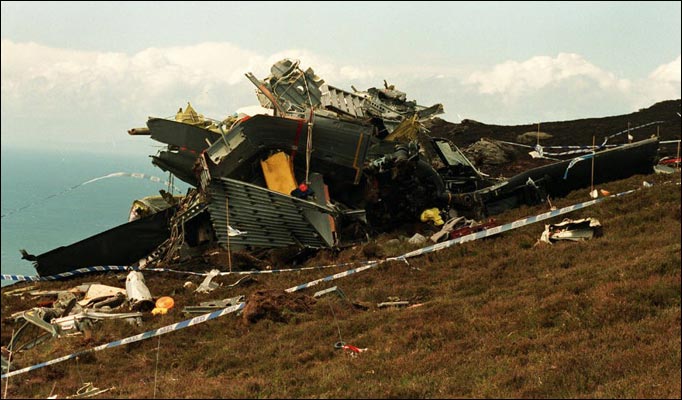
ZD576 Crash Site

ZD576 Crash Site

Our first example is the sad case of RAF Chinook HC2 ZD576, which crashed on 2 June 1994, killing all twenty five passengers and all four crew.  The two pilots, Flt Lts Jonathan Tapper, 28, and Rick Cook, 30, were found by the RAF to have caused the accident by their “gross negligence“, despite that fact that the initial RAF Board of Inquiry did not find any evidence to prove pilot error to any standard (civil – balance of probability, criminal – beyond all reasonable doubt, gross negligence for deceased aircrew under RAF Manual of Flight Safety – absolutely no doubt whatsoever).  From our reading of the case, it would appear that the air officers who reviewed the Board of Inquiry findings and made the gross negligence finding were either extremely badly advised on the legal aspects of what they were doing as reviewing officers, or, as we suspect, did not take appropriate legal advice.  The result is that the families of the pilots continue to live under a deeply unsatisfactory finding, heavily criticised by, amongst others, the House of Lords. (For an excellent legal analysis, see the Opinion of Michael Powers QC and, for balance, the MoD reply.)  As a result of the gross negligence finding, as Powers QC describes in his opinion, it is arguable that other possible causes of the crash of ZD576 were not properly investigated, including engine run away as a result of failure in the engine control system software, FADEC, which itself may not have been properly specified and certified to UK military standards for safety critical software.

The second example is the case of the procurement of eight RAF Chinook HC3s in 1995, which are only just coming into service by being retrofitted to be HC2/HC2As, despite being desperately needed to support operations in Afghanistan.  The eight HC3s were supposed to cost £259 million and be in-service by November 1998 (defined as delivery of the first six). They were in fact delivered in 2001, but could not be granted airworthiness certificates as safety critical avionics software could not be certified to UK military standards, mostly as a result of serious omissions from the procurement contract (as determined by the National Audit Office).  The final programme is likely to cost in the region of £500 million by the time the helicopters enter service.  It is exactly these sorts of contractual omissions that experienced commercial/procurement lawyers involved in all stages of major procurement projects are trained to spot.

Circular law (and constitutional crises)?

In our role as quasi-parliamentary draftsmen for some of our overseas clients, we are all too aware of how the “law of unintended consequences” can alter the effect of a legal provision.

Human Rights Act 1998 Chapter 42

Human Rights Act 1998 Chapter 42

As a topical example in this week of their party conference, we note that the Conservative Party is considering introducing a Bill of Rights to replace the Human Rights Act 1998 (“HRA”).  However, within the HRA is a mechanism to permit a court to declare that any provision of a primary statute is incompatible with the HRA (under s.4).  However, a provision subject to a declaration continues to have full force and effect.

Did the draftsmen of the mechanism foresee the possibility that an attempt to repeal the HRA would itself be a provision incompatibile with the HRA, particularly if the provision was within a Bill of Rights that arguably restricted or limited the rights a citizen enjoys under the European Convention of Human Rights incorporated into UK law by the HRA?

It is a difficult question, which may end up having to be answered by the new Supreme Court, in what would almost certainly be their first confrontation with Parliament since its creation and the true separation of powers in the UK between the fused executive and legislature on one hand and an independent judiciary on the other.

Twitter: in which we serve

Original film poster

Original film poster

In Which We Serve (1942) is a classic wartime film, winning Noel Coward a Special Academy Award (Oscar) for its production.  It is an evocative propaganda film, following the exploits of a fictional HMS Torrin from its commissioning in 1939 to its sinking in 1941.

Sadly, the first use of Twitter to serve a court document does not appear to have been in such an heroic cause.  A blogger and lawyer well known for being on the right of the Conservative Party, Donal Blaney, took exception to the Twitter account @blaneysblarney purporting to be him.   Donal appears to claim that the person behind this Twitter Account, who uses a photograph of Donal as the account’s avatar, is infringing Donal’s intellectual property rights.  The details of the claim have yet to be published.

As Donal does not know the identity of his Twitter impersonator, he cannot serve upon the impersonator any statement of claim or injunction.  In many cases, a person in Donal’s position could seek to obtain a Norwich Pharmacal Order, but this is not appropriate in these circumstances as the person with the relevant identity information, Twitter, is outside of the jurisdiction.  This left Donal to seek other means.  Fortunately, the Court can use any alternative method for a claim form under Rule 6.15 of the Civil Procedure Rules:

“where it appears to the court that there is a good reason to authorise service by a method or at a place not otherwise permitted in this Part” (Rule 6.15(a))

This rule can be applied to injunctions:

“Rule 6.15 applies to any document in the proceedings as it applies to a claim form” (Rule 6.27)

Where has getting the service of the injunction by Twitter got Donal? It must be immediately obvious that enforcing an injunction served or attempted to be served by Twitter against an unknown party is near impossible. This appears to have been realised by another (or the same) Twitter user, judging by the new Twitter account that appeared on the day after the date of the injunction, 1 October 2009, @blarney_blaney (complete with Swastika avatar), to taunt Donal even further.

However, being the first claimant to obtain service by Twitter has brought Donal Blaney, his law firm Griffin Law and his barrister Matthew Richardson considerable publicity.